Hors d’Oeuvres
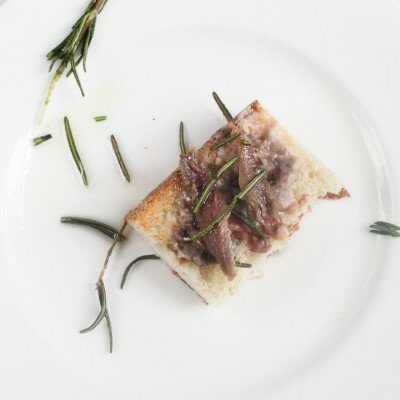
Bone Marrow and Anchovy Crostini
I begin packing his school lunch when he presses the elevator button. By the time the elevator arrives, the meal is sealed up in his little frog knapsack, and we’re out the door. And we live on the third floor. If any of the major food groups are represented, it’s been a success. I shiver to think of the teachers as they watch him pull out a piece of white bread, goldfish, and a chocolate chip cookie.
But starch is an important part of life, and thus he’ll have a firm head start on those children with bags of mini carrots and organic ham. There is, we’re told, a wide variety of foods out there. Not eating correctly and choosing according to our bodily needs is wasteful, ignorant, and lazy. Or so they say. But a diet of pure fat can be even more sophisticated and clever.
The options are staggering: dairy (cream/milk/cheese/butter/etc.); animal (bacon and every other pleasant item); oils (preferably used to fry stuff); and the healthy area (avocados/nuts, preferably pureed with extra oil in a pesto). Everyone has a favorite. For instance, one might enjoy cream, say in a bowl of clam chowder (ingredients: bacon and cream), or an equally creamy potato gratin (ingredients potatoes and cream).
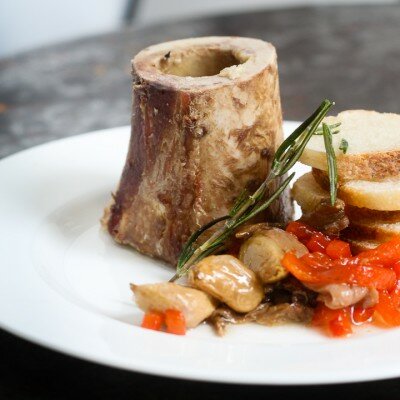
And then there are the neglected fat delivery systems, such as offal (sweetbreads and liver). And like the pimpled teen Donkey Kong champ, marrow fat is king of offal-fat land. It’s a strange item calling for a strange eating method: stick a tiny spoon into a roasted bone hunting for gelatinous ooze. It’s like mining for gold with a toothbrush . Some of the fat melts and oozes into a puddle in the hot pan while the rest remains inside the bone, soft and unctuous.
The best part of marrow fat, and why it is so prized by chefs, is its ability to donate, in one tiny spoonful, both an interesting flavor as well as a fatty mouthful, to a range of dishes, from salads to pasta, and cooked meats and fish. In this sense, it’s like cream or butter, which, let’s face it, added in small (or large) amounts, improve everything, from soups to sauces or shampoos. But because it has an actual flavor, marrow fat, if you can get your hands on it, can be even more useful.
As I did yesterday, this morning I pried four congealed leftover dumplings and threw them in the kid’s lunchbox for a balanced meal of fat and carbs. When I get the energy, I’ll bring in molten marrow fat for the class snack. It’s a valuable introduction to the wonderful world of fat.
(NOTE: you usually spoon marrow over a crostini and leave it at that, but I draped a few anchovy fillets over the top. It’s pretty darn good.)
Bone Marrow and Anchovy Crostini
Makes enough for at least 20 crostini
5 large marrow bones
few tablespoons canola oil
4 large sprigs thyme, two reserved and leaves minced finely
20 anchovy filets (salted)
1 thin baguette (ficelle)
cracked fresh black pepper
1. Preheat oven to 400.
2. Coat a small pan with oil, season bones all over with a bit of salt and pepper and stand in the pan. Roast for about 15-20 minutes, depending on size. The interior should be thoroughly soft and melting when pierced. Remove to a platter, add two of the thyme sprigs to hot fat in the pan and fry until lightly browned, add to plate with bones.
3. Meanwhile, slice bread into thin (no more than ¼ inch) slices and arrange on platter with bones, fried thyme, and demitasse spoons for spreading marrow. Drizzle hot fat in pan over the bread as well as the minced fresh thyme.
4. Serve immediately with anchovy filets.
Fried, Stuffed Jalapenos

At a certain age, a variety of destructive and obnoxious acts, most often drink-related, are more or less acceptable, or at least, considered the next morning with little more than a regretful smirk. Lying down on the street, stumbling through crowds, even committing minor larceny such as skipping out on a cab fare or ripping off a sack of Doritos. (Occasionally, unlucky offenders run across the too-often jilted cabbie, his front seat stocked with an assortment of tire irons and a comfortable relationship with off-label use of said repair tools.)
No matter the level of drama, all evenings culminate in the same fashion: a bellyful of fried or otherwise greasy food: pizza, wings, nachos, and so on. Better yet, a random pile of fried and un-fried selections from behind the smudgy display of a smudgy pizza place: zeppole, slice, garlic knots. And a coke.
As time goes on, we demand less and settle for more. Evenings shorten, booze consumption (at least in binge form) declines, and the word “indulgence” creeps into the vocabulary: to wit, deep-fried food. And we own stuff, like pots and pans, and whisks and oils and salt and pepper, and shop for vegetables and meat and chicken and read about restaurants and think about what to feed the kids. And so we deep-fry at home.

Home deep-frying is not as simple as you’d think. A restaurant fryer comes equipped with a temperature dial, whereas a potful of oil is accompanied by little more than a pesky flame and a basket of potential nightmares. If you don’t overfill the pot, you’ll avoid a volcanic surge of boiling oil streaming over the oven and floor.
Think about risotto and the conventional, near-religious instruction to stand and stir like a Tuscan grandma, her kitchen filled with the clucks of backyard chickens.
Such vigilance is a joke compared with that necessary for deep-frying. Like race car driving, you’re dealing with exact measurements; a hair too fast and you hit the wall, a shade slow and you limp sadly over the finish line. With success comes something well-fried and, naturally, delicious. Keep handy a spray bottle of stovetop cleaner, for this is your life; no more leaving behind a wake of littered empties. Or splattered oil.
Fried Stuffed Jalapenos (from the BLT cookbook)
Serves 6
15 large jalapenos, halved, seeded, cleaned
8 oz cream cheese, room temp
2 ¼ cups flour
1 ½ teaspoons sea salt
1 ½ teaspoons baking powder
12 ounces beer, preferably dark lager
1 egg, lightly beaten
Canola oil
1. Stuff each half chile with about one tablespoon of cream cheese and refrigerate for 20 minutes.
2. In a large bowl, whisk 1 ¾ cups of the flour with the salt and baking powder. Add the remaining ½ cup flour to a plate or flat tray. Whisk in the beer and egg till smooth but not tough (i.e. don’t over whisk).
3. Heat about 4 inches of the oil over medium high heat to 350-375.
4. Remove jalapenos from fridge. Roll a bunch at a time (4 or a 5) in the remaining flour and tap off any excess. Carefully add to oil, fry till golden, about 2 minutes, and drain on paper towels. Season with salt and serve.
Medieval Times

If you’ve been to Medieval Times you’ll grasp the true meaning of finger food. The place-our local branch is virtually across the street from the Meadowlands-is both hoky and depressing. Unlike Disneyworld and its ilk, the offshoots of artistic inspiration, Medieval Times is little more than a weird business idea housed in a pile of stucco off the Jersey Turnpike.
Kids, however, whose taste veers to the half-assed and slapped together, seem to like the place, and ours was no exception. Of particular appeal was the food (or “feast” in Medieval-speak), though I believe part of the joy lay in screaming for the “serving wench”. Everyone eats the same stuff: tomato soup (“bisque”) a Frisbee-sized round of bread, a half chicken accompanied by a spare rib, finished with an apple turnover, all washed down with your choice of Coke, Sprite, or slushie.

And so we put on our crowns and ate. As everyone knows, the fare is served sans utensils-even the soup, which one eats by gripping a handle welded onto the side of a pewter bowl. For canned soup it was pretty good, though to ask the small child on my left you’d think it contained the ripest seasonal heirloom tomatoes and herbs grown in the back next to the horse stalls.
He polished off the whole thing: dunking the bread in the soup and slurping every last drop. Despite scalding my fingertips breaking down our two half-chickens, the entrée wasn’t bad, and we both munched along to the sounds of swords crashing on shields. Needless to say, he filched my turnover, so I can’t report back on the dessert.
The lack of utensils, it turns out, is Medieval Times’ lone stroke of inspiration (the show is pretty lame). For a few hours, your customs are inverted, and that’s pretty cool. Until afterward, when you step into the winter night and negotiate the famous Holland Tunnel bottleneck, which isn’t so cool and you wonder whether it was worth the trip just so you could eat chicken with your hands. And come home only to realize you’re still wearing a paper crown.
Today’s post: an experiment in finger food. Otherwise known as hors d’oeuvres.
Zucchini Chips
2 zucchini
olive oil
salt and pepper
- Preheat oven to 225.
- Use a mandolin to slice up the veg thinly (not tissue paper, but pretty thin-1/16 inch).
- Generously splash some oil on a baking sheet and use your fingers to spread all over. Lay the zucchini in rows over the oil then flip to coat both sides. Season well with salt and a bit of pepper.
- Bake for about 1 1/4 to 1 ½ hours. Check after an hour. If they’re browned on the bottom, flip over. They’re done when browned, not burnt (duh). When you shake the tray, they’ll move like chips. Remove and store in an airtight container for as long as you can resist.
Mini Sausage Burgers

Greater effort yields lesser outcome. A comment not, I’m sure, destined to be tacked on the walls of a high school locker room. However, it’s a pretty useful rule for the home cook. Be realistic about your actions. From cone-shaped tuiles, to emulsified sauces, the kitchen is a minefield of sure disaster. Yes, practice makes perfect, but unless you have the time or professional necessity, expect needless devastation in the form of broken, oily sauces, burnt chips, unfolded roulades, and so on. Forget about dried sausages, a potentially life threatening product useful only to slip into an enemy’s drink.
Even years of practice will only yield a shadow of the real thing, Peking duck being exhibit A. We’ve made the stuff many times: rendering with hot, flavored broth, hanging for days, roasting at just the right temperature. And then we sit at Peking Duck House, where a chef in a long white lab coat carves slivers of fat, meat and skin from a cartoonishly golden bird, and stuff ourselves with unctuous, fatty, crispy pancakes. An experience wonderful and dispiriting at the same time.
Some DIY (a loathsome term) projects are, happily, worth the effort. Take the pig in a blanket. Per square inch, a pig in a blanket is a remarkably efficient, compact delivery vehicle for every dopamine triggering, mouth-watering sensation in the human body. The very sight of the things on a tray weaving through a crowd makes us slobber and shove people aside like New Yorkers looking for a cab on a rainy day.
The problem with pigs in a blanket is twofold: you end up with a case of horrible hot dog breath; they’re expensive and pointless to make yourself.
Worst of all, pigs in a blanket are one-note in flavor. They taste merely of, well, tiny hot dogs. The wrapping adds little more than a limp, fatty crunch. And so we arrive at the true benefit of the feasible DIY kitchen project. Not, as it is commonly thought, a feeling of homemade satisfaction, but rather, a superior product. I wouldn’t say the same about, say, homemade cheese, something better left to your local “monger”, but this one is not only doable, but better.
(NOTE: Payard’s book is loosely accurate. To that end, you may have to beat the dough longer as well as scrape down from the sides several times.)
Homemade Sausage and Peppers (See a recent post)
1. To complete the sandwich, warm the buns and sausage separately. Spread on a bit of mustard. Close, insert a toothpick, and serve.
Mini Burgers (from Payard’s book)
Makes about 50 burgers
2 teaspoons active yeast (1 pkg)
3 tablespoons tepid water
2 ½ cups flour
2 tablespoons sugar
1 teaspoon salt
4 eggs
8 tablespoons unsalted butter, softened
- Sprinkle yeast over water in a small bowl and let bloom for 10 minutes until lightly bubbly.
- In bowl of an electric mixer fitted with a dough hook, add flour, sugar, salt, and 3 of the eggs. Mix on low speed for a few minutes then add yeast mixture. Beat on medium speed for 5 minutes, add butter and beat 5-10 minutes (see NOTE). Remove dough to a lightly floured table, cover with a damp towel and let rest 30 minutes.
- Preheat oven to 400. Roll dough in all directions to form a circle ½ inch thick. Using a small ring cutter (about ½ inch), cut out the dough.
- Line a baking sheet with parchment paper. Arrange burgers on the tray, beat the remaining egg with 1 tablespoon water and brush egg wash over the rounds. Bake 15-20 minutes or until very lightly browned. Remove and use immediately or let cool slightly and save in an airtight container.
Fried Oysters, Fried Pancetta, and Grits

Oysters take me back to summer in Truro. While I’ll take a dozen raw ones over shaved ice any day, come summer we eat them Cape-style, i.e. fried. Fried oysters are the king of fried seafood: good oysters taste supremely of the sea, and so, rather than an excuse to eat fried stuff, a fried oyster is actually a fresh, oceany bite. Which happens to be fried.
There are two factors at play when considering the fried oyster: coating method, and plate construction. The former is a matter of taste. For a pure burst of oyster goodness, dust simply with flour and fry. From there, you move up the crust level, with increasingly thick layers of encasing crunch. Dip them in buttermilk, then flour, or your standard flour-egg-flour process. We went with a double dip: flour-buttermilk-flour then a return to the buttermilk and flour and into the oil.
Plate construction is a fancy way of saying accompaniments. I imagine that in the beginning, in seaside towns such as Truro, people ate their fried seafood Mediterranean-style: dropped in oil and devoured tableside by the water. Over time the dish took a distinctly American turn, and cooks created the “basket” or “dinner”. That is to say, an enormous salad of fried food served in a basket or on a frisbee-sized plate. And so, in Truro, my fried oysters arrive aside a high pile of French fries (and limp salad).
French fries-I eat them all, of course-are a poor foil for fried oysters; they dull the palate and dilute the sharp oyster flavor. It’s also an overdose of fried food. Better to munch on them with a simple tartar sauce or, as we do here, a plate of grits. And a few discs of fried pancetta because, well, fried pork never hurt anyone. At risk of violating seaside food history, French fries don’t necessarily improve a dish. Fried oysters, however, are always delicious and deserve a proper environment.
Fried Oysters, Fried Pancetta, and Grits
Serves 4 as an appetizer
1 cup grits
2 cups milk
16 oysters, shucked
12 slices pancetta
3 cups flour
2 cups buttermilk
oil for frying
salt and pepper
- Bring grits and milk to boil in a small pan, simmer till done, stirring, about ½ hour (add milk or water as needed). Season with salt and pepper. Keep warm
- Set at least 3 inches of oil in a medium pot over medium high heat. Set up two bowls, one with flour the other buttermilk. When the oil hits 325, start dredging oysters: flour then buttermilk, back in flour. Repeat, shaking off excess flour. Fry until golden, about 1 minute. Season with salt. Drain on a paper towel.
- When done, fry the pancetta a few slices at a time for about 30 seconds. Divide grits, oysters, and pancetta among 4 plates and serve.
Oysters Rockefeller via Roux Jr.

There’s something captivating about the entire Roux family. I used to think it was just the brothers (see earlier post), but the mischievous gene has been passed on to the next generation, specifically the younger Michel. On his BBC show, junior cooks French classics such as pigeon with peas, fennel-stuffed bass, morel and sweetbread-filled pigs trotter, and prune-stuffed rabbit saddle. I’ve never heard of any of this stuff-always thought classic meant soufflé-but maybe these are the burgers of France.
Funny, then, that Msr. Roux chose to make Oysters Rockefeller, a quintessentially American plate of food: something I associate with robber barons and businessmen and tourists at the Oyster Bar in Grand Central. But he chose the dish because its creation requires a handful of essential kitchen skills.
An Oyster Rockefeller (let’s use the singular, though I guess you can get a bunch) is a truly gilded lily. A plump, briny oyster is nestled in a bed of creamed spinach, coated with a rich thin custard, and broiled. The result is a warm, briny cream sandwich.
Back to the basic skills. You need to emulsify (egg with oyster liquor); squeeze dry (cooked spinach); broil gently; shuck; strain through fine mesh; temper a liquid; poach oysters very lightly. Nothing complicated, but a series of delicate steps. It’s a little ballet dance where one misstep wrecks the show.
As far as consumption, I envision tuxes, the Waldorf, and cigars. But the Cape being home of the oyster, we ate them picnic tableside washed down with growlers of Cape Cod beer. Msr. Roux would, I’m sure, appreciate.
Oysters Rockefeller (approximated via Msr. Roux)
Makes 4 oysters
4 large oysters
large handful spinach
½ cup heavy cream
1 egg yolk
salt and pepper
- Shuck oysters into a bowl and reserve in the oyster liquor.
- Steam spinach in a little water until limp. Drain, run under cold water. Squeeze out as much liquid as possible and chop roughly. Place in a bowl. Fold in enough cream just to bind the spinach. Season and reserve.
- Strain oyster liquor into a small pan over low heat. Add oysters and poach 15 seconds, remove to a bowl. Reduce liquid by half, add remaining cream (about ¼ cup). Whisk egg yolk in a small bowl and incorporate into the cream as you would a custard: pour a bit of hot liquid into the egg to temper, whisking energetically. Pour mixture back into the pot over low heat, whisking, until creamy. Season.
- To finish, preheat broiler. Spoon a bit of spinach on each oyster shell. Top with an oyster, pour over the sauce. Place on a tray and broil until lightly browned. It could take a few minutes, but watch carefully. Serve hot.
Grilled Squid w/ Basil

There’s a lobster glut around here; they’re scooping them out of the Maine waters at a furious rate, surpassing demand. And so more people are eating and overcooking more lobster than ever .
Like a new store or a Gymboree, the food truck is a symbol of arrival, that people have moved into the neighborhood, or, in this case, a dish has reached ubiquity. Which explains the three cupcake trucks and stands within 100 feet of our apartment. Or, now, the lobster roll truck.
Here in Truro, on the Outer Cape, you can find a pretty good lobster roll, but more typical is the simple steamed lobster with a baked potato and maybe a basket of steamers. I never order or cook lobster any other way, or any other time of the year. To me, lobster signifies summer, baskets pulled right from the sea, pots of boiling water, cold beer, and picnic tables. Rather than chunks of it drenched in mayo, stuffed into a bun, and served from a food truck or in a restaurant.
Squid and clams are year-round fare, though in summer I eat them fried, and in winter I eat them grilled or sautéed. But grilled squid is fantastic and often overlooked, possibly because a handful of tubes and tentacles, squid is surprisingly tricky to cook. Extreme heat is critical for achieving the necessary charred bits, and as grills don’t often get as hot as a smoking pan, you need to let the squid sit for a bit longer. I know this violates squid cookery 101, which says that after 30 seconds the beast toughens. However, no one will turn down a bowl of lightly charred, smoky squid hot off the grill.
Less accessible than a roll full of mayo and lobster, grilled squid may not demand a food truck. But you never know. I’d rather eat great squid than a cupcake.
Grilled Squid with Fresh Basil
Serves 4 as a side dish
1 pound cleaned squid, bodies and tentacles
3 cloves of garlic, sliced
handful of basil, torn
olive oil
salt and pepper
- Dry the squid and toss in a bowl with basil and garlic and a generous pour of olive oil. Refrigerate for 4 hours.
- Oil grill grates and preheat on high then toss on the squid and grill until lightly browned. Remove the tentacles, as they will cook quickly. Sprinkle with salt and pepper and serve.
A Cherry Menu


Come summer, New York becomes a city out of a science fiction novel, its citizens shut in for fear of the gaseous atmospheric conditions outside. Halfway down the block, you feel something strange: the shirt you put on this morning becomes a wet, sticky, second skin, and the head you woke up with begins to sweat like the glass of a cold cocktail left out in the sun, although these droplets are hot and salty and sting the eyes. And so we chain ourselves to our air conditioners.
New York is denser than a ball of rubber bands. The only available space is the sky; people are packed atop and wound around one another, and that’s only half the story. As involved is the world below the pavement: pipes, subways, cords, wires, and so on. The result is a world wrapped around itself, trapped in its population and structures, totally unfit for summer heat, which is why I seem to take several showers a day.
Scattered within this map are particularly unpleasant, flaring hot spots. Such as Chinatown. Chinatown in the summer is a throwback, a piece of the city untouched by urban planners and whoever sits around thinking of mixed spaces and bike lanes. The only thing mixed here is the air, a soupy whiff of hot kitchens, sweating fish, and sweating people. However, Chinatown is the cherry zone: street vendors sell bags of cherries at prices so cheap I suspect something nefarious. But as long as I get my cherries…
Cherries may be about sunshine and middle America and pie and cute towns, but to me, cherries are about Chinatown in the summer, and threading my way on my bike, through the streets and the humidity to grab my bags of cherries. This is a truncated menu using cherries; raise a glass to Chinatown and New York in the summer.
Mustard Crusted Salmon w/ Cherries
Serves 4
4 salmon fillets, 6 oz each, skinless
2 tablespoons Dijon mustard
2 tablespoons fresh bread crumbs
1 shallot, minced
2 cups red wine
¼ cup balsamic vinegar
2 cups cherries, halved
2 tablespoons cream
4 tablespoons unsalted butter
chopped parsley
salt and pepper
- Season each fillet lightly with salt and pepper, spread one side of each fillet with a thin coating of mustard and sprinkle over bread crumbs. Reserve.
- For the sauce, in a small saucepan, sauté shallots in 1 tablespoon of the butter until soft, add the balsamic vinegar, wine, and half the cherries, mashing them as they soften, and reduce to a few tablespoons, then whisk in the cream and butter. Strain through a fine mesh strainer, stir in remaining cherries, season, and reserve.
- Heat a broiler and broil the fish, coated side up, until medium rare, about 6 minutes.
- Heat sauce, stir in some parsley, spoon some of the sauce including the cherries, on a plate, and top with the salmon.
Cherry Clafoutis
Makes 1 tart
1 tablespoon unsalted butter
3 tablespoon flour
¼ c sugar
2 egg yolks
1 cup heavy cream
3 tablespoons kirsch
1 ½ pounds cherries, pitted
pinch salt
4 eggs
1 cup milk
1 vanilla bean, split and scraped
confectioners’ sugar, for dusting
- Preheat oven to 375. Butter a 10-inch clafoutis dish and fill with cherries. Set aside.
- Sift flour and salt together into a bowl. Add sugar. Whisk in eggs, egg yolks, milk, and cream. Add vanilla and kirsch; whisk to combine.
- Strain batter over the cherries, bake until puffed and browned, about 45 minutes. Let cool until warm, dust with confectioners’ sugar and serve.
Cherries and Cream
Serves 6-8
2 pounds cherries, pitted and halved
2 cups heavy cream, whipped to stiff peaks
1. Place cherries and cream in separate bowls.
2. Eat.
Huntsman’s Terrine

If you spend time at all reading or watching about food, you know that, these days, pork is king. And not just the evening family pork roast or weekend grilled ribs, but a worship of the entire animal. Historically, the best stuff (see jazz) has been a product of the south, and the proof of pork’s arrival is the jammed BBQ street fairs and restaurants firing their hog pits throughout the city. Well, not everything southern is so great (see human rights), but back on topic.
For food watchers and participants, the pig is an emblem of modern cooking, a walking, slop-eating cookbook; virtually every section, appendage, and organ of the pig suitable for the dinner plate. And its fattiness fits with our poor eating habits; unless there’s a swiss chard mania of which I’m not aware. Because the beast has such a wide range of flavors and textures-from lean loin to fatty belly and weird ears-pork is a perfect vehicle for a terrine which is by definition a meat mix.
It’s a reasonable assumption that a book called simply, Terrine, would be a cornerstone of the terrine junkie’s library. And while, I suspect, a bit lazy in the testing department, Stephane Reynaud’s book is pretty good. Recently we posted his lentil terrine. Here’s his so-called “Huntsman’s Terrine”, a squab-pig combo which is pleasantly meaty, smoky, and gamy.
A final note on the pig: while it’s easy to look down your snout on trends, the pig is good eating. But, more importantly, the pig is good for the butcher, such as Pino, our guy on Sullivan Street, and anything good for the butcher is good for us all.
(NOTE: Terrine recipes tend to make large amounts, and Reynaud’s are no different. While I suppose this is because they’re meant as group picnic fare, terrines are designed to fit, well, the terrine pan, and most of these are relatively large. There are smaller pans, but I suggest following the recipe and making a whole batch. Terrines last in the fridge for general snacking. In addition, meat for terrines can be ground, chopped, or left whole. Here he calls for the pork to be chopped which I took to mean minced, a pretty major pain in the butt, but good for a chunky texture. To save hassle, grinding coarsely is fine.)
Huntsman’s Terrine (adapted from Terrine)
Serves about 10
2 squab, breasts, skinned w/ hearts and livers
6 tablespoons olive oil
3 ½ ounces banyuls or port
11 oz fatty pork shoulder, minced
7 oz pork belly, minced
2 shallots, minced
3 ½ ounces slab bacon, diced
7 oz mushrooms, chopped
salt and pepper
- Preheat oven to 350.
- Heat half the oil in a small pan, add livers and hears, sear for a few minutes deglaze with the banyuls, season, scraping bottom of pan. Chop on cutting board and reserve in a medium bowl.
- Add pork belly, shoulder, shallots, and bacon to the bowl. Season and stir.
- Saute mushrooms in a pan with the remaining oil until browned. Add to the bowl and stir.
- In a terrine, pour half the meat, layer the squab breasts, pour over the remaining meat. Cover with lid or foil.
- Place terrine in a roasting pan, fill the pan with boiling water halfway up the terrine, bake 2 hours. Serve cold.
Asparagus and Eggs

Vague food is, and has been, central to the fabric of American home cooking. Time crunch, disinterestedness, whatever: come evening, a gaze into kitchens would reveal arms rustling through cabinets, heating a pan or two, reaching for the nearest utensil, and stirring. Door-to-door-in this case, counter to table-in half an hour or less.
The family sitting down to dinner, staring at their plates with a combination of fear and confusion, is an iconic image, to wit, the mashed potato tower in Close Encounters. Actually, mashed potatoes are the perfect example of desperately hasty cooking: mush. But at least it comes (usually) from a vegetable.
Random ingredients, often canned, introduced to heat, produce, you guessed it, soft food. And so we get weird casseroles, soups, and egg dishes. Canned food is a staple of mystery food. However, cans are lonely: they were designed for ease and storage, not cooking i.e. combination with any other earthly product. Mixing anti-social items in a pan makes for a sad meal.

To free yourself from this awkward party is not to cook with an actual, clear dish in mind, but rather, with a few things that you know go together. You may not be able to name the dish: sandwich, soup, etc. But it will taste fine, which is all that matters. And if, in the process, it looks nice, that’s a bonus.
This one was the result of pantry scrambling, and I’m not sure what to call it. It’s kind of an appetizer, but had I found more asparagus and eggs in the fridge, I’d be comfortable calling it a salad. Either way, it looks nice, tastes nice, and is neither soft nor scary. I’d make it again, only as a big salad. For now, I don’t have a label. But I ate it with a smile.
Asparagus and Eggs
Serves 1
4 thin asparagus, trimmed of woody end
1 egg
1 teaspoon grain mustard
3 tablespoons olive oil
salt and pepper
- Bring a medium pot of salted water to boil, carefully add the egg and cook 13 minutes. Near the end of cooking, add asparagus to pot as the egg cooks, and blanch 3-4 minutes, making sure they’re still crisp. Remove and dry on a paper towel. Slice in coins ¼ inch thick. Add to a bowl.
- Remove egg, and when cool, peel and halve. Season.
- Whisk mustard and oil in a small bowl, season with salt and pepper. Toss with asparagus, top with egg. Serve warm.