Subscribe to The Dish
Salads
Yogurt Rice, or the importance of curry leaves

I can’t decide whether Paul Bertolli’s book, Cooking By Hand, is obnoxious, critical culinary instruction, or a bit of both. Bertolli, longtime Chez Panisse chef, is known for his exacting dissection of ingredients. Minutiae are his thing: percentages of hard to soft wheat in flours for fresh pasta; the advantages of milling your own wheat for the same; the crucial distinctions between balsamic vinegars, heritage pork breeds, and so on.
Is he on target? Is it really pointless to make fresh flat noodles out of Baker’s Choice versus the little known but ideal Promotory brand, constructed from a “harder” wheat? If he came to dinner and I served him Baker’s Choice pasta would he toss it out the window onto the Broadway pavement below?
I suppose a massive series of taste tests would put the matter to rest, but that’s one kitchen project I doubt we’ll undertake. It’s messy enough to make one batch of fresh pasta. Pushing out a second batch using special mail-order flour and mineral water would surely coat the apartment with a thick, floury mat. Also, logistics aren’t in my favor: It’s tough to hang sausages in a New York City apartment and even trickier to find the space for a flour mill.
I will concede, however, that there is such a thing as an indispensable ingredient without which a dish is a mere shadow of the genuine article. For certain dishes, “optional”, a term which peppers so many recipes, is at best wishy-washy and at worst criminal. Curry leaves are just such an ingredient.
Living in New York, we’re spoiled by the profusion of specialty items. For most, a lush garden of unusual stuff is a few subway stops, or brief traffic dodging bike ride away. And so I cycle uptown, wearing my empty backpack, past Union Square, into Gramercy, to Kalustyan’s from which I emerge, backpack stuffed with sacks of dals, pink salt, bags of spices, nuts, and, invariably, the aforementioned fresh curry leaves. The ride back is slightly more perilous.
Earthy and almost toasty, fresh curry leaves are a critical component of Indian cooking. Imagine fried chicken without salt, a burger without ketchup, or chicken salad without celery, and you get the idea. Curry leaves round out the dish, adding fragrance, flavor, and color to an otherwise lifeless product.
Yogurt rice is a perfect example. Yogurt rice is a delicious, cold side dish of Basmati rice mixed with yogurt, fried dal, mustard seeds, chiles, and curry leaves. It is Indian food at its purest: quick with an exquisite balance of spices. Minus a handful of curry leaves, yogurt rice is forgettable and frankly not worth the trouble.
Paul Bertolli may know everything about pasta, balsamic vinegar, and sausages, but he can’t convince me I won’t be able to follow his tortelli of tagliatelle with braised poussin recipe and come out with a pretty decent dish of pasta. However, I know for sure that if you come across an Indian recipe which calls for “optional” curry leaves, and you don’t have any, make something else. It simply won’t be the same.
(NOTE: you can use all urad dal or mung dal. Asafoetida is highly useful in Indian cooking, and in the spirit of this post I haven’t labeled it “optional”, but if you can’t find the stuff I won’t be too upset.)
Yogurt Rice
Serves 4
1 cup basmati rice
2 tablespoons olive oil
½ teaspoon mustard seeds
12 curry leaves
3 dried chiles
2 tablespoons urad dal
2 tablespoons chana dal
¼ teaspoon turmeric
pinch asafoetida
2 cups yogurt
juice ½ lemon
- Wash rice. Combine with 2 cups water in a medium saucepan, bring to a boil, stir, cover, simmer slowly until done, then leave 15 minutes before fluffing.
- Heat oil in a small pan with the mustard seeds. When they begin to pop, add the curry leaves, chiles, and dal. Fry, stirring, about 2 minutes, till the dal has colored. Stir in turmeric and asafetida.
- Combine the yogurt and dal mixture in a large bowl, mix in rice, season with salt and lemon juice. Refrigerate. Serve cold.
Artichoke Confit

If you want to encourage a non-cook to use his kitchen, the artichoke is not a great place to start. The majority of this globe is inedible, woody fiber. Getting to the “food” is like hacking through the Amazon with a machete: tough, army-green plant matter flying all around, settling, finally, on your kitchen floor.
Other poor starter foods may include: unpitted olives, beets, leeks, fennel, and mangoes. These are fruits and vegetables that inspire a special kind of listlessness. No one wants to go home and have a death match with the Thomas train you bought for your kid, and which requires a surgeon’s touch to install the batteries. So why take home produce that seems equally labor-intensive and annoying? Which is one reason why markets sell more cucumbers and lettuce than fennel.
Unfortunately, nature doesn’t accommodate the produce shopper, who misses out by passing on items such as fennel and artichokes. In his photographs, Charles Jones, the late 19th century gardener and photographer, captured the complexities of these vegetables. Their odd structure-curves and crevasses, folds, points, humps, and waves-requires a little finesse with the knife.
There is a labor factor hierarchy here. An olive pit is an annoying little nub. Beets (unless shaved very thin) require long cooking. Leeks come embedded with grit, and fennel has a difficult structure to make sense of.
Artichokes, however, conjure the most terror in home kitchens. Rather than a vegetable, they seem an object to conquer, a beast of prey genetically designed to withhold its treasure.
There is a quick way and a relatively slow way to extract the heart of the choke. The quick is really a restaurant method mastered by practicing on crates of chokes under the whip of a sadistic chef. There are more peaceful systems, and this is my preferred method:
- Squeeze a bunch of lemons into a bowl of cold water. Drop in the squeezed halves.
- With your hand, rotate the artichoke and snap off most of the bottom third of the leaves. Make sure not to pull down, as that will tear off edible choke. When you hit the light green layer, use a super sharp or serrated knife and slice just above it (about a third of the way from the bottom of the choke). Discard everything but what you’re holding (choke and stem)
- Using a paring knife and/or peeler, trim off the remaining green parts. Peel the stem as well.
- Using a spoon, scrape out the fibrous choke. Drop into the acidulated water.
Step-by-step photos would be easier perhaps, but this isn’t a glossy food mag. If I haven’t explained it well, email or consult the web. I prefer this method.
As for cooking, you can do pretty much anything: sauté, roast, add to a braise, steam, parcook and add to pasta, etc.
While these are all fine, to bring out the essence, the pure artichoke flavor, I prefer to confit in a few cups of olive oil. Unlike cooking in a liquid medium, none of the flavor is leached out, and unlike sautéing or roasting, there is no caramelization, which alters the taste.
Gently poaching in olive oil gives you a creamy, unadulterated artichoke. And after all that work, you may as well enjoy the real thing.
(Note: For this recipe, pureeing the already creamy flesh with the cooking oil makes for a luscious product. Topping it with the tender confited leaves adds flavor and texture. Be sure to use only the bright yellow leaves! Even slightly green leaves turn into chewing tobacco. Save the remaining oil for a vinaigrette.)
Artichoke Puree w/ Tender Artichoke Leaves
Serves 2
1 globe (large) artichoke, quartered, yellow inner leaves reserved
2 lemons, halved
2-3 cups olive oil
1 clove garlic, minced
¼ cup parmesan, grated
salt and pepper
- Prepare the artichoke as described above and reserve in the lemon water.
- Drain and dry. Add the quartered heart (you can cut in large chunks) and the leaves to a small pot and pour in the oil just to cover. Place under low heat and cook until very tender. You may need more oil than called for. Also, be sure not to let it bubble too much. You want a very low simmer. Remove from heat.
- Using a slotted spoon, remove the choke (not the leaves) to a blender along with the garlic and parmesan. Turn on blender and puree, adding enough of the flavored oil to achieve a very smooth texture. Season with salt and pepper.
- Plate the puree, sprinkling with the confited leaves.
Anatomy of a Crummy Cookbook
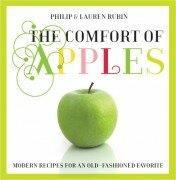
 Note: we have a cookbook out there (on apples) and plan on future ones, so what follows is risky. But irritation is too powerful an instinct to ignore.
Cookbooks are seductive little packages. Like the dictionary or a math textbook, or Knicks box scores. They carry the unusual stamp of accuracy and authority. Which is why often we succumb to their spell, even for the simplest dishes. Next up: Mastering Toast.
Last week, Greek was on the menu, i.e. tzatziki and hummus, tabouli, taramosalata, etc. It’s easy, and the tastiest meal requiring more or less a whisk and a bowl. If you have neither, order in. However, if you have a small kid and a little kitchen, do what we do and use the accompanying mini whisk, easily located under the couch.
Yogurt, whisk, bowl, chopped up garlic and cucumber, we were ready to assemble. Until I glanced on the counter to a new purchase, Michael Psilakis’ How to Roast a Lamb. He’s a celebrity chef with a bunch of Greek restaurants, but not too famous to have his picture on the front. Instead, the cover photo is a classy shot of a few lemon halves, a garlic bulb, thyme bunch, dish of green olives, and olive oil bottle. All arranged on a muted grey background. Turning a sad eye to our worn burners, the greasy olive oil jug, and circular red wine stains dotting the marble counter, I reached over and flipped through the index to tzatziki.
You know those moments when you do something you know is wrong but continue on anyhow? Not drugs or any of that. I mean the time you ate Chinese food in Alabama, paid 12 bucks to see The Hulk, played slots, or took a bus to Atlantic City.
That’s exactly how I felt I smashing and finely chopping 10 cloves of garlic, according to Psikalis’ recipe. Other than a delicious roasted piece of meat, I can’t think of any food product improved by 10 garlic cloves. Especially a raw application like tzatziki. Same goes for the obscene 1 cup of distilled white vinegar. And yet, there I was measuring it out and pouring it into the blender along with the aforementioned garlic, yogurt and a whole (!?) cup of dill.
At least I wasn’t burdened by the hope often accompanying cooking. I knew it would suck. But it was my fault for following this prescription. Of course, it was a disaster: a stinging blow of garlic merged with a near chemically astringent vinegar assault. I dashed to the freezer for a shot of vodka in the hope the alcohol would burn off the searing nightmare coating my palate.
As offensive was the recipe for Fried Pork and Beef Meatballs (Soutzoukakia). Calling something by its Greek name seemed charming and authentic. Doing my usual pre-recipe scan I ran across 15 slices of Wonder Bread. Once again I was back at a Chinese restaurant in Alabama, taking the plunge. I’ve never seen or even considered a meatball recipe requiring 15 slices of bread, and the result proved my skepticism: crumbling meatballs barely held together by a mass of soggy bread
So too the Eggplant Spread (Melitzanosalata) which supposedly makes 1 quart. It was actually tasty but how one eggplant produces an entire quart of dip is beyond me. More like a scant 2 cups buddy.
There are numerous lessons here, so I’ll just go with bullet points:
-don’t trust a celebrity chef
-homey ethnicity does not a great recipe make
-don’t trust nice, heavy paper and fancy, understated pictures
-don’t trust a book with pretentious chapter titles: “Open Water”, “Dinner, Family Style”, My First Recipes”, “The Hunting Trip”, “A Lamb and a Goat”, “Psilakis Birthday Dinners”, and so on.
Oh yeah, beware a cookbook leavened with text about family remembrances and cute memories. To wit, page one of the introduction:
“It was never specifically my dream to write a cookbook. My passion is for the kitchen and I love sharing this passion for food and my Greek culture with other people…But as my father’s health declined and I spent hours and long nights with him sitting in his hospital room and revisiting the wonderful life I was fortunate to share with him, the idea for this book was born. Telling these stories, the pictures of my childhood, and coupling them with the food of my youth would be a way to honor my father.”
For obvious reasons, beware a cookbook beginning with the phrase “It was never my dream to write a cookbook.” Also, why not do what you’re best at and serve the food of your father in your restaurant? That seems more soulful than forcing out a book.
Most important, don’t follow recipes. Go with your gut. In that spirit, we don’t offer a recipe, just ingredients. Taste as you go, as you should with all cooking.
Tzatziki
Unstrained Greek yogurt
White wine vinegar
Plenty of garlic (we like to chop it into a paste)
Dill
Cucumber (fine dice or grate or whatever you like)
Salt and pepper
Beet Farro-It’s Cold Outside

If you read cookbooks from 40 years ago, you’ll notice they have one thing in common: the food is often unappealing. The desserts are probably fine: carrot cake and apple pie haven’t changed. But in general, the recipes are-not unexpectedly- dated.
In his giant New York Times Cookbook, Craig Claiborne tackles Chinese food, turning out a chapter of sad stir fries. I’ve been skimming James Beard’s Theory & Practice of Good Cooking, and the recipes seem fine, but leave you with a nagging feeling that something is a little off. His sautéed burger looks acceptable. But when you read the headnote, and his prescription for how to avoid burgers from sticking to the grill-slip an ice chip in the center-you start to worry. If I wanted a watery burger, I’d eat it in the shower.
Not that Beard does a lot of sautéing. Like a lot of cooks back then, the broiler is near and dear to his heart. We like it for last minute browning and cooking thin items. It also cuts down on dirty pans. However, Beard’s broiler is a central facet of his kitchen, down to the broiled scallops. Sticking a scallop under the broiler doesn’t seem to make a lot of sense. Unless you hold them in your palm an inch away from the blazing heat, they won’t brown well. Scallops need a hot pan and about 2 minutes on each side.
He cooks gnocchi with a cup of instant farina rather than flour, a mixture which, if I had an Italian grandma, would probably give her a stroke. Of course, most of the recipes contain massive quantities of butter. Especially the vegetables. Braised fennel 5 tablespoons butter; braised celery 4 tablespoons butter; braised lettuce 4 tablespoons butter.
Forty years ago, we wouldn’t have posted (printed) this farro recipe. Farro and other grains are relatively new here, there’s no butter just olive oil, and the beets are folded into the farro rather than being a side dish. It calls for just 2 or 3 main ingredients, but it’s of the times, when, ironically, we’ve learned that, often, simpler is best.
Beet Farro
Serves 4
3 medium beets
¼ cup olive oil
2 tablespoons minced shallots
1 cup farro
2-3 cups chicken stock
2 tablespoons thinly sliced scallions, white and light green parts only
salt and pepper
- Preheat oven to 400. Wrap beets tightly in foil and roast until tender, 1 to 1 ½ hours. Remove and when cool, peel the skin and chop. Puree in a blender or food processor with 1 cup of the stock. Reserve.
- Warm the 2 tablespoons of the oil in a medium saucepan over medium heat. Add the shallots and sweat until translucent with no color. Add the farro and mix well, coating with the oil and cooking until it smells nutty, 3-4 minutes.
- Fold in the beet mixture until incorporated. Bring to a simmer and cover, lowering heat a bit and stirring occasionally so the beets don’t scorch.
- The farro will take about 25 minutes. After 10 or so minutes it may appear dry in which case add stock along the way. The end result should be slightly thicker than risotto but still pourable.
- Divide the farro among the plates, garnish with scallions and drizzle with remaining 2 tablespoons olive oil.
If you read cookbooks from 40 years ago, you’ll notice they have one thing in common: the food is often unappealing. The desserts are probably fine: carrot cake and apple pie haven’t changed. But in general, the recipes are-not unexpectedly- dated.
In his giant New York Times Cookbook, Craig Claiborne tackles Chinese food, turning out a chapter of sad stir fries. I’ve been skimming James Beard’s Theory & Practice of Good Cooking, and the recipes seem fine, but leave you with a nagging feeling that something is a little off. His sautéed burger looks acceptable. But when you read the headnote, and his prescription for how to avoid burgers from sticking to the grill-slip an ice chip in the center-you start to worry. If I wanted a watery burger, I’d eat it in the shower.
Not that Beard does a lot of sautéing. Like a lot of cooks back then, the broiler is near and dear to his heart. We like it for last minute browning and cooking thin items. It also cuts down on dirty pans. However, Beard’s broiler is a central facet of his kitchen, down to the broiled scallops. Sticking a scallop under the broiler doesn’t seem to make a lot of sense. Unless you hold them in your palm an inch away from the blazing heat, they won’t brown well. Scallops need a hot pan and about 2 minutes on each side.
He cooks gnocchi with a cup of instant farina rather than flour, a mixture which, if I had an Italian grandma, would probably give her a stroke. Of course, most of the recipes contain massive quantities of butter. Especially the vegetables. Braised fennel 5 tablespoons butter; braised celery 4 tablespoons butter; braised lettuce 4 tablespoons butter.
Forty years ago, we wouldn’t have posted (printed) this farro recipe. Farro and other grains are relatively new here, there’s no butter just olive oil, and the beets are folded into the farro rather than being a side dish. It calls for just 2 or 3 main ingredients, but it’s of the times, when, ironically, we’ve learned that, often, simpler is best.
Beet Farro
Serves 4
3 medium beets
¼ cup olive oil
2 tablespoons minced shallots
1 cup farro
2-3 cups chicken stock
2 tablespoons thinly sliced scallions, white and light green parts only
salt and pepper
- Preheat oven to 400. Wrap beets tightly in foil and roast until tender, 1 to 1 ½ hours. Remove and when cool, peel the skin and chop. Puree in a blender or food processor with 1 cup of the stock. Reserve.
- Warm the 2 tablespoons of the oil in a medium saucepan over medium heat. Add the shallots and sweat until translucent with no color. Add the farro and mix well, coating with the oil and cooking until it smells nutty, 3-4 minutes.
- Fold in the beet mixture until incorporated. Bring to a simmer and cover, lowering heat a bit and stirring occasionally so the beets don’t scorch.
- The farro will take about 25 minutes. After 10 or so minutes it may appear dry in which case add stock along the way. The end result should be slightly thicker than risotto but still pourable.
- Divide the farro among the plates, garnish with scallions and drizzle with remaining 2 tablespoons olive oil.
Crunchy Vinegar Cole Slaw – Our Summer In Truro

We spent August in Truro, a town on the very tip of Cape Cod. The air is crisp (what they call “cape air”), and because the land extends out into the Atlantic, it’s exposed to the elements, which whip away the dunes and toy with the tide, creating an entirely different seascape from one day to the next.
Our first day there, the water was inches high for as far as the eye could see. As he built seaweed piles, Henry was bit by a small crab, causing the kind of dramatic situation inherent in a 2-year-old, though in all honesty, I think I’d yelp and whine just as much, if not more.
The drive from city to Cape can be lengthy, depending on whether you run into the mass of vacationers funneling into the Bourne Bridge, the Cape’s sole entry point. So we stop at a diner and break it up. This year, we pulled into your standard roadside diner: a silver caboose, bowl of aged jelly-filled mints by the register, and enormous plastic menus.
In general one should be suspicious of a kitchen that advertises stuffed sole, a chef’s salad, apple pie and everything in between, but I never fail to become entranced and downright fooled by such wondrous variety! Sipping my diet coke I landed on the chicken salad, visions of freshly roasted chicken shredded, lightly dressed with mayo, perhaps studded with a fine dice of celery, maybe a little minced dill…just the way I like it.
Alas, our waitress handed me my lunch. I’ve never attended an AA meeting, but I know it’s based on 12 steps. I realize now that, staring down at my plate, I began my own set of steps: recovery from dejection. At first I felt my heart sink with disappointment, as a child feels when rain ruins a long-anticipated outing. Next came self-pity as I raised my eyes to see my family eating halfway-decent eggs and chewy-looking bacon. But at least it seemed edible, which mine was not.
Finally, my spirits raised into a genuine state of curiosity. What was going on back there to create such a thing? My “salad” was a giant scoop of cat food. Poking it with my fork revealed an odd texture, as if teeny tiny (as my son would say), chewable grains of sand had been bound by beige glue. Clearly, something had been pulverized somewhere and shipped, and/or this was someone’s idea of proper chicken salad. Which got me thinking about salads. And other stuff.
Think of the best thing you’ve ever eaten. I bet it’s fried or grilled or braised, and it’s probably meat. However, it could be a veggie or fish, which has been treated the same way. Okay, it could be a dessert, but I can’t relate. Fried chicken, onion rings, BBQ ribs or brisket, braised short ribs, a great burger, a great cheese, crab cakes, ultra fresh sushi, am I getting close?
Trapped in bumper to bumper traffic en route to the Cape, our son intently watching Toy Story in the backseat, I considered the common thread. I came up with proximity to the source ingredient: fried chicken is just chicken; the best crab cake is light and packed with plump, meaty crab; great sushi is simply the freshest fish. Our favorite chicken, served in the sweaty hell of Chirping Chicken, is simply a seasoned, grilled bird. How unbelievable is a prime, aged steak? Just like a great burger, the ideal meatloaf is moist, oozing with the aromas and juices of primal, high quality ground beefiness.
I considered some personally repellent dishes: a log of hollowed-out bread filled to the brim with spinach-sour cream dip; a curious mixture of what I later discovered to be pureed grated cheese and mayo; summer camp mac ‘n cheese. These are unctuous and slimy, unpleasant, possessing an institutional pallor.
The cars beside me were stuffed with squirming kids, sweaty adults, beach chairs, toys, clusters of bikes and surfboards lashed to their roofs. I smiled: for once, I had developed a valid theory. Bad food is adulterated food, having little resemblance to its original components. A great mac ‘n cheese forkful oozes with powerful cheddar (my favorite) flavor piled high with macaroni. You can almost see the grated cheese and uncooked noodles back in the kitchen. It’s not a cloying cheese and noodle soup. Neither is spinach dip a soup of dairy tossed with green spinach-like shards.
In short, unless it’s for babies, glop is bad. Which is why we love vinegar-based cole slaw. No mayo, just a bowl of crunchy cabbage tossed with a sharp, slightly sweet vinegar dressing. Even better the next day.
It’s almost worth the Cape trip for the grill. After a day at the beach, we cook on the deck. Sometimes it’s ribs or steak, but mostly we stick to what’s local: fish. The market around the corner sells heavy hunks of swordfish. The cleanest, tastiest food: from sea to store to grill to plate, nothing extra, except for salt and pepper. No longer a theory: proven culinary fact embodied by a bowl of cabbage.
Crunchy Vinegar Cole Slaw
Serves 6
1 large head green cabbage
¼ cup sugar
¼ cup vegetable oil
¾ cup distilled white vinegar
2 teaspoons dry mustard
2 teaspoons celery seed
salt and pepper
- Using a mandoline, shred the cabbage finely, about 1/8 inch. Reserve in a large bowl.
- In a small saucepan, combine the remaining ingredients except the salt and pepper. Bring to a boil, whisking to dissolve the sugar. Pour over the slaw, toss well and season with salt and pepper.
- Refrigerate the slaw for at least two hours, tossing occasionally, but it is better if left overnight, tossed sometimes to coat all the cabbage.