Subscribe to The Dish
Desserts
Key Lime Pie the real deal
 Having polished off a giant platter of stone crab, I put my feet up on the table, sipped a cold beer and looked out at the Florida sun setting over the beach. I reached for the plate with its wedge of key lime pie and chewed drowsily.
And then I was nearly mowed down by a Chinese delivery guy. It was an abrupt shift into reality, which right now involved squeezing myself through paper-thin gaps between the train of cars extending from Broadway down Broome headed for the Holland Tunnel and the Jersey suburbs. Another end of a workday. Prematurely hot; hints of the sweaty city summer to come.
I was heading to day care where everyday I pick up our son.
“We’re making a pie,” I said as we crossed the street on the return trip. “Key lime. No crying. No playing. Hurry up.”
He lifted his scooter helmeted head, a bit confused, as if he had been picked up by the wrong guy. An angry pie baker.
Midway through juicing my second bag of tiny key limes, I realized the pie had to chill overnight. A devastatingly amateur but necessary recipe step. I baked the crust, filled the pie, spread and browned the meringue and popped it in the fridge. And waited.
I consider key lime pie a mother pie. The French have their mother sauces; we have mother pies, most of which seem to be associated with fall, winter, and especially thanksgiving: apple pie, pumpkin pie, pecan pie. There are also spring and summer fruit pies like cherry pie and strawberry-rhubarb.
A genius creation, key lime stands alone, proudly independent. While its siblings call for assistance in the form of whipped cream or ice cream or some sort of sauce, key lime pie is an autonomous entity. Each slice provides cream, sugar, acid, and a crunchy, toasty crust. Not to mention a nice lime hue in contrast to the glum muddiness of, say, pecan pie.
The next day, I pulled it from the fridge, crunched my fork through the bruleed meringue then the soft filling, and finally the crunchy, buttery graham cracker crust. Then moved over to our window. The sun was hitting the buildings on the east side of Broadway. Down on the street sightseeing buses crawled by and the hot dog man was parked in his usual spot by the bank.
I propped my feet up on the windowsill and took a bite of pie.
Key Lime Meringue Pie (from the Clinton St. Baking Company Cookbook)
Makes one 9-inch pie
Crust:
¾ cup graham cracker crumbs
½ stick unsalted butter, melted
2 tablespoons sugar
¼ teaspoon vanilla extract
Filling
¾ cup key lime juice
1 14-oz can condensed sweetened milk
4 egg yolks
zest one lime
Meringue
2 egg whites
1 cup sugar
Preheat oven to 350.
- Mix the graham cracker crumbs and butter in a bowl then mix in sugar and vanilla.
- Press evenly onto bottom and sides of a pie pan (the back of a spoon helps to smooth out). Bake 10 minutes. Reduce oven to 325, remove and let cool.
- Meanwhile, whisk together filling, fill crust and bake at 325 for 8-10 minutes, until the filling is set. It may still jiggle in the center but have the firm texture of a pie or custard. Remove and raise temperature to 350.
- Place whites in bowl of stand mixer and whisk on medium for a minute then add the sugar gradually and mix about 5 minutes till fluffy and a marshmallow consistency.
- Use a spatula to spread the meringue over the top of pie without pressing too hard. Use it to make peaks and craters. (You’re going for a rustic look.)
- Bake at 350 for 10 to 12 minutes until meringue is golden and crusty.
- Chill overnight in fridge.
Cinnamon Buns – Baking With Our Almost 3 Year Old

At what age do we start uniting concepts? Or, since we tend to frame everything in school-terms, is it 5th grade, 6th, 7th?
And what does that even mean, to link notions? One of our favorite This American Life episodes, “Kid Logic”, explores how kids think. Little kids, watching a plane fly away, believe that it becomes physically smaller. The producers visited a summer camp, where they recorded pre-teens convinced, essentially, of the bogeyman. I recall my camp days, around the fire, shivering in fear as the counselors told of homicidal prison escapees lurking in the dark woods.
As we age, we comprehend empirical evidence: one thing leads to another (or doesn’t), depending on our experience. Until I had my own kid I never thought about any of this, but it’s sort of interesting to see his small mind developing. Context: Henry is almost three and, as far as I know, normal, despite having a superhuman motor. Sometimes I think he could talk and run for days without dropping of exhaustion.
Henry’s mind is a memory collage. He can’t follow a narrative film (yesterday it was Elf), but he’ll retain certain pleasing or arresting highlights. And so, for the past week, he’s been saying “remember Santa push the button and the sled go down and…” To no avail, I try to remind him of the surrounding story. As far as he’s concerned, the film is worthless save for this moment. The same goes for everything else in his young life: “Remember she had three lollipops…remember the banana shake place…remember I go party…remember Buzz Lightyear and he fly and hit Woody…?” And that’s one sentence.
Sometimes we bake with him. At first, we cooked a bunch of carrot cakes. We heave him onto the counter by the standing mixer, and he dumps in the butter, flour, sugar, eggs and so on. He flips the switches too and so far hasn’t gotten his hand caught in the whirling paddle, which would be problematic. His mixing done, he gets bored. We pour the batter into the pan and stick it in the oven. Generally, we do this at night. Come morning he sprints out to the kitchen as usual, and lo and behold, there’s the carrot cake. Even though he made it last night, he’s surprised to see it, but soon recall kicks in.
We’ve also mixed pizza dough and cinnamon buns, but he calls them pizza buns and cinnamon dough: just like Elf, he registers the act of mixing, but doesn’t necessarily follow that through to their distinct end products.
As parents, our instinct is to teach and correct: “no, Santa’s riding the sleigh because…” or “the buns rise because there’s yeast, and yeast makes…” Yet, he’ll get it soon enough: maybe this is the time to have some fun. Cover a cinnamon bun with cheese and call it pizza, or, as his tiny hands fold carrots into the cake batter, tell him we’re making a raisin bagel.
The recipe is word for word from Peter Reinhart’s great book The Bread Baker’s Apprentice. The book has a lot of great recipes, but I like this the best. First, perhaps due to the butter, the dough feels smooth and supple, like one of those squishy hand exercise balls. And second, it’s kind of magical to roll up the sugared dough and see that tray of sweet spirals emerge from the oven, smelling of, well, warm cinnamon buns.
Reinhart instructs how to transform these wonderful buns into sticky buns. It’s a simple matter of baking them atop butter and sugar, which caramelize the undersides, so that when served flipped over, they are coated in a lustrous, sticky, dark glaze, much like a tarte tatin or upside-down cake. Of course, they taste great, but we prefer the plainer, unadorned bun which, when opened releases an indescribably comforting puff of yeasty, cinnamon steam. Biting into it, you aren’t assaulted by sugar, rather a light sweetness and the occasional crunch of granulated sugar.

Cinnamon Buns
(from The Bread Baker’s Apprentice, Peter Reinhart, Ten Speed Press 2001)
Makes 8 to 12 large or 12 to 16 smaller cinnamon or sticky buns
6 ½ tablespoons sugar
1 teaspoon salt
5 ½ tablespoons shortening or unsalted butter at room temperature
1 large egg, slightly beaten
1 teaspoon lemon extract or grated zest of 1 lemon
3 ½ cups all-purpose flour
2 teaspoons instant yeast
1 1/8 to 1 ¼ cups whole milk or buttermilk at room temp
½ cup cinnamon sugar (6 ½ tablespoons sugar plus 1 ½ tablespoons ground cinnamon)
white glaze for cinnamon buns
caramel glaze for sticky buns
- Cream the sugar, salt, and butter or shortening on medium-high speed in an electric mixer with a paddle attachment. (If doing it by hand, use a mixing bowl and large spoon.) Whip in egg and lemon extract or zest until smooth. Add flour, yeast, and milk and mix on low speed until the dough forms a ball. Switch to the dough hook and increase speed to medium, mix for about 10 minutes until dough is supple, tacky but not sticky. (Or if by hand, knead 12 to 15 minutes.) You may have to add a little water. Lightly oil a large bowl, transfer dough ball to bowl, rolling to coat with oil and cover with plastic wrap.
- Ferment at room temp about 2 hours or until dough doubles.
- Mist the counter with oil, transfer dough to counter. And roll out the dough.
- To roll: roll with a rolling pin, lightly dusting top of dough with flour to keep from sticking to pin. Roll into a rectangle 2/3 inch thick and 14 inches long by 12 inches wide for larger buns, or 18 by 9 fro smaller ones. Sprinkle the cinnamon sugar over the entire surface and roll dough into a cigar-shaped log, creating a cinnamon sugar spiral as you go. With seam side down, cut log into 8 to 12 even pieces for larger buns, or 12 to 16 for smaller buns.
- For cinnamon buns, line 1 or more sheet pans with parchment, place ½ inch apart so they don’t touch but are close to one another.
- For sticky buns, coat the bottom of 1 or more baking pans with sides at least 1 ½ inches high with a ¼ inch layer of the glaze. Sprinkle on the nuts and raisings. Lay the dough on top, spacing ½ inch apart. Mist with spray oil and cover loosely with plastic wrap.
- Proof the buns (both cinnamon and/or sticky) at room temp for 75 to 90 minutes until they’ve grown into one another and nearly doubled. You may also retard the shaped buns in the refrigerator for up to 2 days, pulling the pan out before baking and allowing 3-4 hours to proof.
- Preheat oven to 350 with rack on the middle for cinnamon buns, but the lowest shelf for sticky buns.
- Bake cinnamon buns for 20 to 30 minutes or sticky buns for 30-40 minutes, or until golden brown. Remember, if making sticky buns, the bottom will become the top so the key is getting the bottom nice and golden. This takes practice to know when to pull them from the oven.
10. For cinnamon buns, cool buns in pan for 10 minutes and steak with white fondant glaze (we omit this step) across the tops while the buns are warm but not hot. Remove from pan onto a cooling rack and wait 20 minutes before serving. For sticky buns, cool in pan 5 to 10 minutes, remove by flipping over onto another pan. Carefully scoop any remaining glaze back over the buns with a spatula and wait 20 minutes before serving.
White glaze
4 cups powdered sugar
1 teaspoon lemon extract
6 tablespoons to ½ cup warm milk
- Sift the sugar into a bowl, add the extract then slowly add the milk, whisking to dissolve the sugar, only enough to make a thick, smooth paste. Streak them over the warm buns by dipping the tines of a fork into the glaze and waving over the tops.
Caramel glaze
½ cup sugar
½ cup brown sugar
½ teaspoon salt
½ pound unsalted butter at room temperature
½ cup corn syrup
1 teaspoon lemon or vanilla extract
- Cream together the sugar, brown sugar, salt, and butter in the bowl of a standing mixer with the paddle attachment for 2 minutes on high speed. Add corn syrup and lemon or vanilla extract. Cream for 5 minutes until light and fluffy.
Apple Bread Pudding

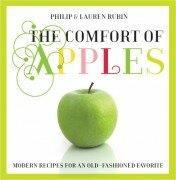
This recipe comes straight from our book, The Comfort of Apples, and while the subtitle of the book is Modern Recipes for an Old-Fashioned Favorite, “modern” is a truly umbrella term.
Whoever offered mustard with hot dogs or topped pizza with pepperoni was a (temporarily) modern cook, and a hero to kids everywhere. (Though Henry is an odd duck; no matter how much we beg, he won’t eat pizza.) The idea is to take a popular existing item and append it with something that makes it even tastier, greater than the sum of its parts. Apple bread pudding isn’t likely to supplant hot dogs and mustard in the hall of invention, but it’s modern in that it boosts the flavor of something delicious on its own.
Our bread pudding was the first recipe of the book, so you might say it has sentimental value. We were up in Montauk and starting to work on the book. The issue was we were sharing the house with friends, who had to put up with deep pans of the stuff for four or five nights. At least they got to see the testing process.
We tried using raw apples, which didn’t get tender enough. We tried cooking them with some spice, but found it overwhelmed the pudding flavor. We tried making the custard base as you would an ice cream-tempering the eggs, straining the curds, etc. but it was too complicated and ultimately unnecessary. We tried different ratios of eggs to liquid, sugar amounts, bread cube sizes, oven temperatures. For a pan of essentially bread and custard, it was a lengthy process, but we found victory at the end of the vacation.
In the end we got it right. In fact, we made it the other day and it was just as delicious as it was when we pulled it from the oven the final day in Montauk. It’s a simple bread pudding, with the right combination of crunch on the top to soppy on the inside. The apples are simply simmered in water and add the extra warmth that only cooked apples can.
This post is dedicated to the Montauk crew for politely downing excessive quantities of bread pudding, all in the name of friendship (and modern cooking). Enjoy.
Apple Bread Pudding
Serves 4-6
2 tablespoons unsalted butter for greasing the pan
3 cups peeled and diced apples (1/2 inch dice)
¾ cup water
1 15-ounce challah or brioche, crusts removed (raisin challah is best), 1-inch dice
2 cups milk
2 cups heavy cream
3 egg yolks
2 eggs
¾ cup sugar
Honey
- Preheat oven to 350
- 2. Grease a 12*8-inch baking pan with butter. Set aside.
- In a medium saucepan over medium-high heat, add the apples and water. Bring to a simmer and cook until tender. Drain and reserve.
- Spread half the bread evenly on the bottom of prepared pan, follow with layer of apples, finish with remaining bread.
- Add the remaining ingredients except honey to a medium bowl and whisk vigorously until incorporated. Pour evenly over the bread. Some bread will protrude, which is desired. Press lightly so the top layer of brad soaks up the custard.
- Bake the pudding until an inserted skewer comes out clean, 45-50 minutes. Drizzle all over with honey and serve hot.